The immigration headlines of 2025 and 2026 have been unsettling for couples in Jacksonville who are in the middle of a marriage-based green card case or are just starting one. New USCIS policy language, enforcement shifts, and confusing press releases have left many wondering whether the path they planned is still open to them. It is, but the environment has changed in ways that matter before you file a single form.
Over more than a decade of immigration practice in Jacksonville, our team at Law Office of Karen Winston, LLC has guided couples through every version of the USCIS processing environment, including periods of policy volatility much like the current one. What we’ve found, consistently, is that couples who come in prepared fare significantly better than those who assume eligibility alone will carry the case. That’s especially true right now.
Two Paths, Two Very Different Timelines
The single most important fact in a marriage-based green card case is whether the sponsoring spouse is a U.S. citizen or a lawful permanent resident. These two situations involve different legal categories, different wait times, and different filing strategies.
Spouses of U.S. Citizens
Foreign nationals married to U.S. citizens are classified as immediate relatives, a category with no annual numerical cap. Because there’s no cap, citizen-sponsored spouses who are already in the United States on a valid visa can file Form I-130 (the petition establishing the marital relationship) and Form I-485 (the application to adjust status to permanent resident) at the same time. This concurrent filing approach is the most significant timeline lever available. USCIS fiscal year 2026 data puts the median processing time for concurrent filers at approximately 5.7 months, though field office workload can push that higher depending on where the interview is scheduled. Simultaneously, the foreign spouse can apply for an Employment Authorization Document and advance parole, which allows international travel without abandoning the adjustment application.
Spouses of Lawful Permanent Residents
Spouses of lawful permanent residents fall under the F2A preference category, which carries an annual cap on available visas. That cap creates a wait that doesn’t exist in the immediate relative category. The total timeline varies considerably. It is typically one to two years when the category is current, and potentially longer during retrogression, so monitoring the Visa Bulletin each month is a practical necessity. Form I-485 can’t be filed until the foreign spouse’s priority date is current according to the Visa Bulletin.
What the 2026 USCIS Discretion Memo Actually Means for Married Couples
On May 21, 2026, USCIS issued policy memorandum PM-602-0199, which reframes adjustment of status as a discretionary benefit. Under this framework, officers are directed to weigh the totality of circumstances when evaluating applications, rather than treating approval as automatic for technically eligible applicants. This has generated significant anxiety. Some of it is warranted, and some of it is based on a misreading of what the memo actually says.
The phrase “only in extraordinary circumstances” that circulated widely in headlines comes from a USCIS press release, not from the operative body of the memo itself. The memo doesn’t change who is eligible for adjustment, doesn’t ban filings, and doesn’t create a new legal standard for defining a valid marriage. Spouses of U.S. citizens with clean immigration histories and genuine, well-documented marriages remain the lowest-risk group under the new framework.
What the memo does change, practically speaking, is the tolerance for thin files. Officers now have explicit guidance to weigh discretionary factors, which means more detailed Requests for Evidence, more substantive field office interviews, and less room for an application that relies on bare eligibility rather than documented evidence of a real life together. A complete, layered application matters more now than it did before May 2026.
Stage-by-Stage: What Jacksonville Couples Should Expect
Receipt & Biometrics
After filing, USCIS issues a receipt notice on Form I-797 within two to four weeks. Biometrics follow approximately four to eight weeks later at an Application Support Center, where fingerprints and photographs are collected for background check processing. This step is largely procedural, but its completion is required before the case moves forward.
The Jacksonville Field Office Interview
Adjustment of status interviews are scheduled at the USCIS Jacksonville Field Office at 4121 Southpoint Boulevard. This office serves 46 counties across North Florida and parts of Georgia, including Duval, Clay, St. Johns, and Nassau counties. Florida consistently ranks among the top states for new immigration filings, and high application volumes can push the wait between biometrics and the interview date beyond national median figures.
The interview is where the totality-of-circumstances framework from PM-602-0199 becomes most visible. Officers will review the application in detail, question both spouses, and examine documentary evidence of the marriage. Couples who arrive with organized, consistent documentation tend to have shorter, more straightforward interviews.
Approval & Conditional Residence
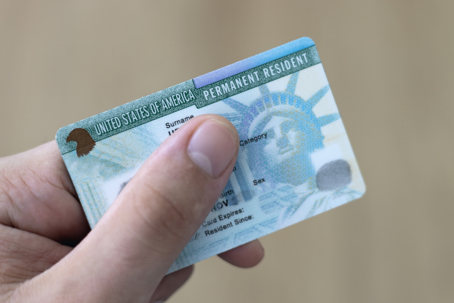
If the marriage was less than two years old on the date USCIS approves the case, the foreign spouse receives a conditional permanent resident card valid for two years rather than the standard 10-year card. Within the 90-day window before the conditional card expires, the couple must file Form I-751, the Petition to Remove Conditions on Residence, to demonstrate the marriage remains genuine and obtain a standard permanent resident card. Missing that window can create significant complications.
What Makes a File Strong Enough in 2026
In the post-memo environment, establishing a bona fide marriage requires consistent and layered evidence rather than a handful of documents.
Strong files typically include:
- Joint financial accounts showing regular activity
- A shared lease or mortgage listing both spouses
- Named beneficiary designations on life insurance or retirement accounts
- Photographs taken across different time periods and locations
- Communication records
- Corroborating statements from people who know the couple
No single document is sufficient on its own, and gaps in coverage invite scrutiny. Spouses who overstayed a visa or carry prior immigration violations face heightened discretionary review under the new framework. Spouses of U.S. citizens who entered the country legally and have no violations retain the strongest statutory position, but even they need to build a complete record. Eligibility is the floor, not the ceiling.
Two common delays are worth planning around specifically. A Request for Evidence on Form I-864, the Affidavit of Support, often comes when the petitioner’s income documentation is incomplete or doesn’t clearly meet the threshold for the household size. Form I-693, the medical examination completed by a USCIS-designated civil surgeon, is valid only for the specific application for which it was submitted, so timing the medical exam relative to filing is a strategic decision, not an afterthought.
Preparation Is the Variable You Control
The marriage-based green card remains fully available for couples with genuine relationships who enter the process prepared. The 2026 policy environment has raised the documentation standard and increased the weight officers give to discretionary factors, but it hasn’t changed the underlying path for couples who are legally married and can show that life on paper.
At Law Office of Karen Winston, LLC, we work with couples in English, Spanish, and Haitian Creole, and we treat each case as the individual situation it is, not a form-processing exercise. If you’re ready to understand what your timeline looks like and what a strong file requires in your specific circumstances, call us at (904) 740-3690.